Before leaving Wi-Fi
Use a route planner such as NAVER Map, which the Korea Tourism Organization lists among travel resources. Save the destination in Korean as well as your own language. Choose the exact branch of a café, museum or hotel; similar names are not proof of the same place.
Read the route in four pieces: walk to the station or stop, ride, transfer if any, and final walk to the entrance. Save a screenshot of the station names and address as a backup, but treat live arrival predictions as changeable. If stairs are difficult, check the accessible route and elevator availability rather than trusting the fastest itinerary.
| Stage | Save beforehand | Check on arrival |
|---|---|---|
| Hotel to station/stop | Entrance and walking route | Crossings and lift access |
| First ride | Line, direction, next stop | Platform and stopping pattern |
| Transfer | Next line and passage | Signs and card taps |
| Exit to destination | Exit, address, exact branch | Actual entrance |
At the subway station
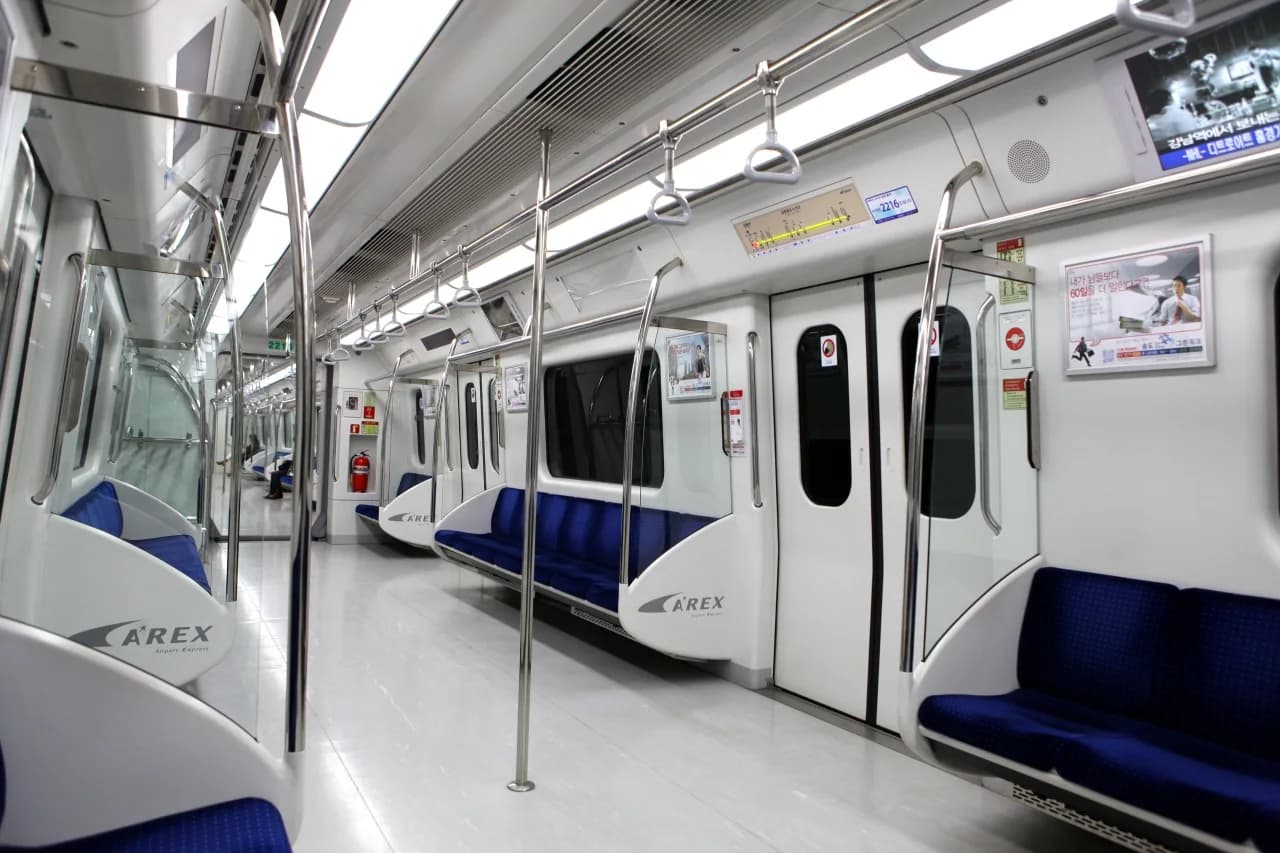
First identify the correct line and direction. Check the next station shown on the platform signs against your route, not only the end-of-line name. Some services branch or stop differently; verify that your train serves the destination before boarding.
Tap your card at the gate, then keep it separate from other contactless cards to avoid presenting the wrong one. If using a single-journey ticket, follow the machine's payment and deposit instructions. Do not assume a foreign bank card will work directly on the subway gate because it works in shops. A payment-capable machine and a fare-gate-compatible card are different things.
Transfers and fares without the common misunderstanding
The published adult subway base transport-card fare is KRW 1,550. Extra distance or other fare systems can add charges, so this is not a flat price for every trip. Follow transfer signs inside the station rather than exiting to street level unless your route explicitly requires it.
Integrated transfers require the same card for one person and taps on boarding and alighting. Normally board the next service within 30 minutes of alighting; the window is 60 minutes from 21:00 to 07:00, determined by the next boarding time. Up to four transfers, five boardings, are covered; reboarding the same bus or route is excluded. Distance charges can still apply, and a long sightseeing or meal break should be budgeted as a new journey.
| Situation | Rule | Important detail |
|---|---|---|
| Adult subway card fare | KRW 1,550 base | Not a flat fare for every distance or line |
| Normal transfer | Within 30 minutes | Same card and both taps needed |
| 21:00–07:00 | 60-minute window | Based on the next boarding time |
| Same bus/route again | No transfer discount | Reverse travel is not automatically free |
Taking a city bus
Match both the bus number and the direction: the stop across the road may serve the same number in the opposite direction. Check that the upcoming stop list includes your destination. Prepare your card before boarding, tap as instructed, watch the stop names, request your stop in good time and tap again when getting off.
For a first journey, keep the destination visible on your phone and count down the remaining stops. If luggage would block the aisle or you cannot safely board, use a more suitable alternative instead of forcing the plan. Airport buses and intercity coaches have their own ticket and luggage rules; do not apply city-bus instructions to every bus.
Wrong direction, missed stop or rejected card?
On the wrong train, get off at the next safe stop and check the return route. Do not rush across a platform without confirming its direction. If you miss a bus stop, stay aboard until the next stop and recalculate; do not ask to alight between stops.
At a gate error, stop and ask staff or use the help point. Do not follow another passenger through. If you exited by mistake, ask before tapping back in: special re-entry concessions have conditions and are not a promise of a free second entry everywhere. Show the saved Korean destination when language is a barrier.
Finish the day with a workable return plan
Check the last complete connection to your hotel, including transfers, not just a station's closing time. Save the hotel address and a backup taxi option before the evening. We do not publish a citywide last-train hour because it varies by station, destination, day and service.
With children, a stroller or limited mobility, choose the route with manageable walks and elevators even if the app labels another one faster. Leave room for toilets and a missed departure. Before each trip, confirm five things: destination entrance, correct direction, usable payment, final exit and a return route. Independent public transport is usually the first option to evaluate; a private transfer is a convenience choice, not a requirement for visiting Seoul.
A useful habit is to check four things before entering: your destination in Korean, the required line or bus number, the direction, and the final exit or stop. After boarding, compare the next station or stop with the route you saved. If it does not match, stop and recheck at a safe place instead of continuing because the line color looks familiar. Keep a hotel address available offline for the return trip and allow your plan to change when a lift, route or last connection is unavailable.
- Save the exact entrance and Korean address.
- Match line, direction and next stop.
- Prepare each person’s card and balance.
- Tap the same card when entering and leaving.
- Check lifts, stairs and luggage suitability.
- Confirm the final exit and walk.
- Keep a complete return connection and fallback.
Optional Gimpo SIM and Tmoney pickup
The linked GetYourGuide bundle is a traveler SIM and rechargeable Tmoney card collected at Gimpo Airport. It is not a Climate Card or unlimited city-transport pass: the transport balance needs a separate top-up. Consider it only if Gimpo pickup and a physical data SIM suit your arrival; it is not an Incheon pickup or a compulsory extra card for someone who already has one.
Before booking, check the phone’s unlocked status and physical-SIM support, data duration, selected pickup point and counter hours, required documents and delayed-flight arrangements. The checked listing offers free cancellation up to 24 hours before starting, subject to the final option terms. Its starting price does not confirm inventory or your final total. Buying just a transport card locally is a separate alternative.
Sources & verification
Prepared by Gollaba using the sources below. Planning suggestions are editorial judgments, not claims of a personal visit.
- Korea Tourism Organization — Route-planning resources ↗Source checked:
- Seoul Metropolitan Government — Subway fares ↗Source checked:
- Seoul Metropolitan Government — Integrated transfer rules ↗Source checked:
- GetYourGuide — Gimpo SIM and rechargeable Tmoney bundle ↗Source checked: