Read the boundary, not just the neighborhood name
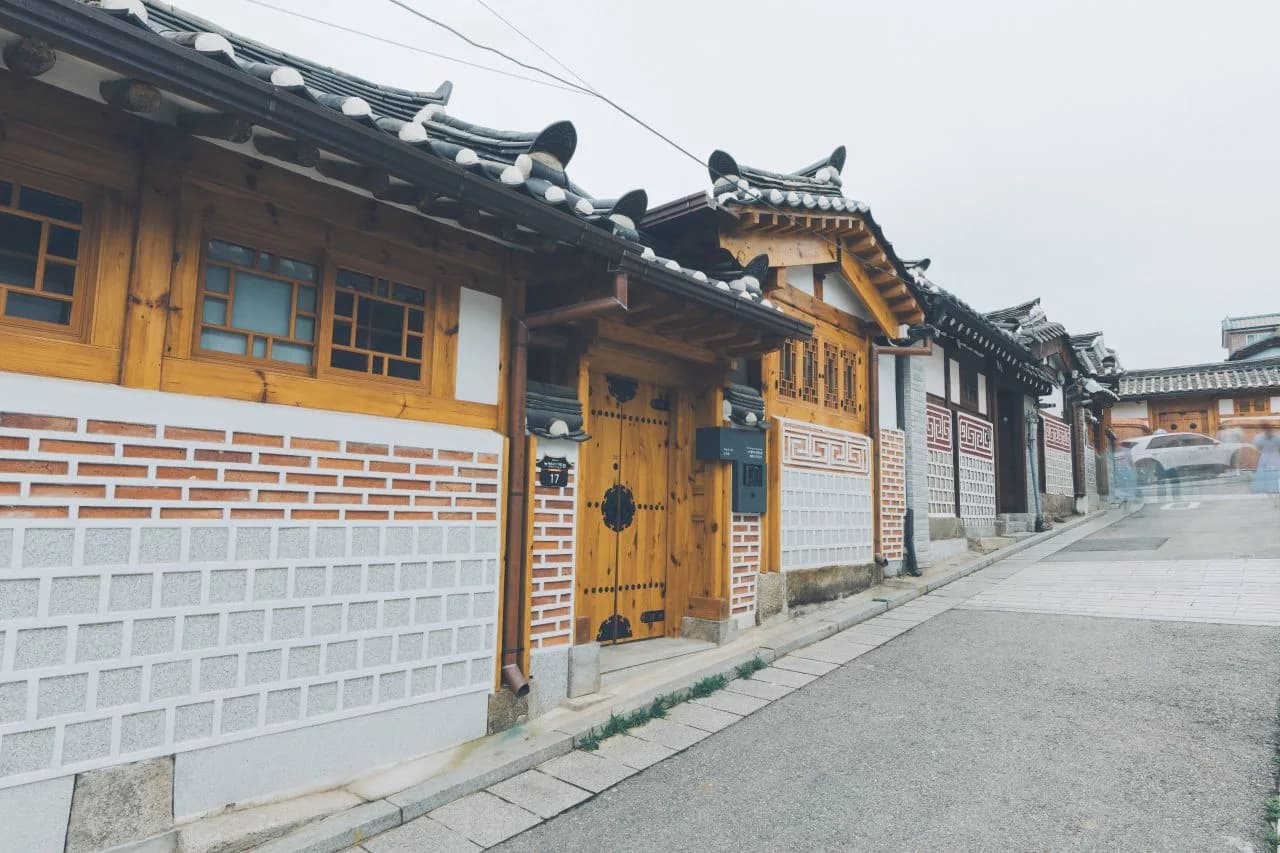
The restricted red zone covers designated residential lanes around Bukchon-ro 11-gil. Its tourist visiting window is 10:00–17:00, with access restricted from 17:00 until 10:00 the following morning. Enforcement and the KRW 100,000 penalty are real visitor rules, not simply a recommendation to arrive early. Check the current official map and the signs where you enter.
A search result labeled “Bukchon” may point to a shop, cultural center or street outside that exact boundary. Conversely, a convenient walking route can take you through the restricted lanes without making that clear in its title. Do not infer permission from the fact that a navigation app proposes a path. If the boundary is unclear, ask local visitor staff and choose a route that remains clearly outside it.
Choose a considerate time
Plan to be out of the red zone before 17:00 rather than treating that time as your last opportunity to start a visit. Seoul also describes Sunday as an alley rest day and asks visitors to refrain from visiting residential alleys. Keep that request distinct from the red zone’s enforceable overnight restriction, while taking both seriously when choosing your itinerary.
Do not turn the permitted window into a promise that every attraction, workshop or café will be open. Public cultural spaces have their own weekly closures and program schedules. A simple approach is to check one cultural venue first, choose a permitted short walk around it and leave room for an unhurried exit. If your only available time is outside the window, arrange a different activity instead of looking for a quieter entrance.
Start with context at the cultural center
Bukchon Traditional Culture Center at 37 Gyedong-gil provides context about hanok and the neighborhood before a walk. Seoul Hanok Portal gives access from Anguk Station on Line 3, exit 3. Check any separate workshop reservation; general visiting information does not guarantee a class in your language.
From there, decide how much walking your group actually wants. A short route with one cultural stop and a few permitted streets can be enough. Save the starting address and an exit destination so you do not keep looping through the same residential lane. If someone needs a rest, use a public facility or business where visitors are welcome rather than sitting on a private threshold.
The center currently lists Tuesday–Friday 09:00–18:00 and Saturday–Sunday 09:00–17:00; it closes on Monday and opens until 20:00 on Wednesday. Evening access to the center does not permit an evening tourist walk through red-zone lanes. Check dated program notices and any separate workshop reservation.
Photograph the street without entering private life
This is a residential neighborhood, not an outdoor film set. Keep voices low, avoid amplified commentary and let residents pass without having to ask. An open door or window does not give permission to photograph inside a home. Stay out of driveways and entrances, and do not move objects, lean on gates or block access to improve a picture.
Before stopping, look behind you as well as toward the view. A group can obstruct a narrow lane even when each person thinks they are standing briefly. Take the photograph, move on and discuss the next stop in a wider appropriate space. If somebody asks you not to photograph their home, put the camera down and leave the doorway clear instead of debating whether the street itself is public.
Replace the visit when conditions do not fit
If you arrive after the permitted window, choose an open cultural venue, a commercial street outside the restricted boundary or a meal elsewhere. Check each destination’s own hours and the route between them. A booking at a nearby business is not general permission to tour residential lanes after hours. Ask the business for compliant access instructions if its address creates uncertainty.
The same principle applies to weather and mobility. Wet sloping lanes or a tired group may make a shorter visit the better choice even within permitted hours. You do not need to complete every viewpoint to have understood the place. Spend the remaining time on a public exhibition or a seated cultural activity that genuinely welcomes visitors, with any language and reservation requirements confirmed beforehand.
Leave with the neighborhood still livable
Keep the visit small enough that your group can move aside easily. Put rubbish away until you find a proper disposal point, and finish snacks where eating is appropriate instead of leaving packaging in a doorway. A quiet visit is not only about your volume: repeated photo stops, prolonged conversations and a group waiting outside one home can all become a disturbance.
Before leaving your accommodation, share the boundary, visiting window and meeting point with everyone, including anyone arriving separately. At the end of the walk, move out together rather than sending half the group back through the same lanes to find a missed photograph. The better memory is a considered visit to a living neighborhood, not a completed checklist of doorways.
- Red-zone boundary and 10:00–17:00 window understood.
- Sunday rest-day request considered.
- Cultural-center calendar and any workshop booking checked.
- No private interiors, blocked entrances or amplified sound.
- Exit route and meeting point shared with the group.
Sources & verification
Prepared by Gollaba using the sources below. Planning suggestions are editorial judgments, not claims of a personal visit.
- Seoul Metropolitan Government — Bukchon restricted visiting hours ↗Source checked:
- Visit Seoul — Bukchon Hanok Village ↗Source checked:
- Seoul Hanok Portal — Bukchon Cultural Center ↗Source checked: