Entering and ordering
Pause at the entrance and indicate the number of people. Some places seat you, some use a waiting list and others direct you to a kiosk or counter. Look for the staff’s instructions rather than assuming a table is free because nobody is sitting there. If you have a tight train or activity booking afterward, ask about the wait before joining a queue.
For a solo meal, “혼자 식사할 수 있나요?” asks whether you can dine alone. For a menu, “메뉴 주세요” asks to see the menu. You do not need a long memorized speech. Speak politely, show the phrase if useful and let staff clarify the process. A translated menu helps, but it may not explain every ordering condition.
Servings and minimums
A price can refer to one serving, a weight of meat, a whole shared dish or a set. “1인분” indicates one serving, while a shared dish may be sized small, medium or large. At barbecue and shared-pot restaurants, ask whether a minimum number of servings applies. One diner should not assume that one displayed serving can always be ordered by itself.
Useful questions are “몇 인분인가요?”—how many servings is this?—and “1인분 주문할 수 있나요?”—can I order one serving? Ask whether rice, noodles or other additions are included. Choose an amount you can finish, then add more if the restaurant allows it. A large photograph is not a portion guarantee, and the cheapest number on a menu is not necessarily the final meal cost.
| Need | Show this question | Clarify |
|---|---|---|
| Solo dining | 혼자 식사할 수 있나요? | Seating alone |
| Portion unit | 몇 인분인가요? | Dish, weight or set |
| Minimum order | 1인분 주문할 수 있나요? | Minimum servings and conditions |
| Extras | 추가 요금이 있나요? | Rice, noodles, sides, additions |
| Payment | 카드 결제 되나요? | Your particular card |
Ingredients before ordering
If a dish’s ingredients matter to you, ask before submitting the order at a kiosk or paying. A vegetable topping does not identify the broth underneath, and a mild-looking sauce can contain ingredients you avoid. Distinguish an allergy from a preference and do not rely on removing visible pieces after cooking as a solution.
For heat level, “덜 맵게 해 주세요” asks for less spice, but a prepared sauce may not be adjustable. For a serious food allergy, use a clearly translated ingredient-specific card and ask whether the kitchen can accommodate it, including cross-contact. If staff cannot confirm, choose another option. Ask about shared equipment and surfaces as well as ingredients. CDC describes separate preparation to reduce cross-contact; that is not a safety certification for Korean restaurants. Follow your clinician’s personal preparation advice.
Side dishes and self-service
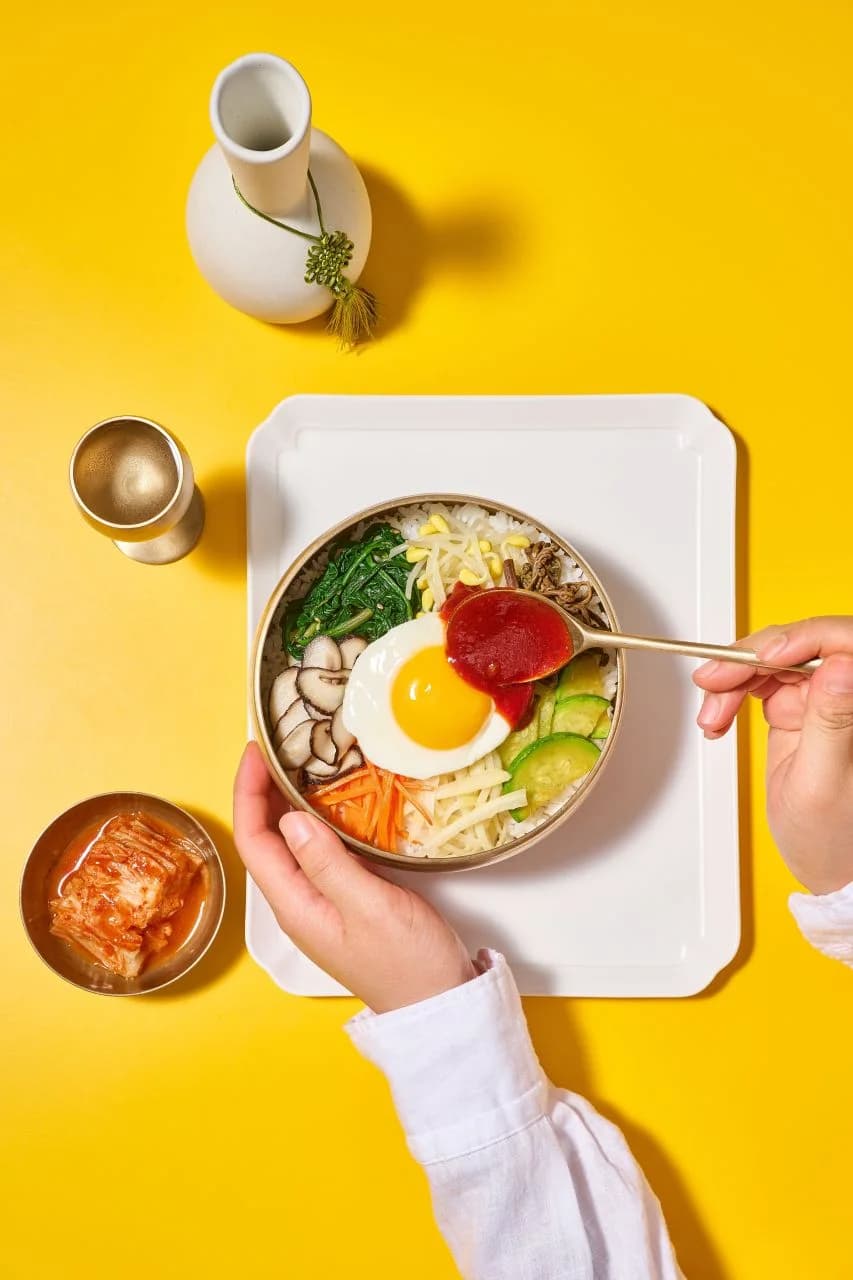
Korean meals often arrive with rice and small side dishes, called banchan. Some restaurants provide self-service water or side dishes; others bring them to the table. A call button or a cutlery drawer may be present, but not every table uses the same arrangement. Ask staff where to find something instead of opening unrelated cupboards or handling another table’s items.
For an extra portion, ask “추가 요금이 있나요?”—is there an extra charge? Basic refills are commonly included in ordinary dining, but special sides, meat or separately listed additions can be different. Take modest amounts at self-service counters and follow the restaurant’s sharing rules. Do not assume unlimited food because small dishes were served at the start.
The bill and payment
Follow the restaurant’s payment sequence: a kiosk may take payment before food, while another place settles at a counter after the meal. “계산해 주세요” asks to pay, and “카드 결제 되나요?” asks whether card payment is possible. Confirm the particular card works before a large order if you have no easy backup.
Review quantities and additions on the bill and ask about an unfamiliar line while staff can explain it. Tipping is not generally required or expected in Korea; it is not necessary to add a foreign tipping convention automatically. If you need split payment, ask before the final transaction rather than assuming the system supports every division. Keep a receipt when the total or currency needs later checking.
A complete meal sequence
Imagine arriving alone at a restaurant with a shared stew photograph. First ask whether solo dining and one serving are available. Then establish whether the displayed price includes rice and whether the broth contains an ingredient you avoid. Only after those answers should you place and pay for the order. If the minimum is too large, politely choose another restaurant rather than negotiating after cooking starts.
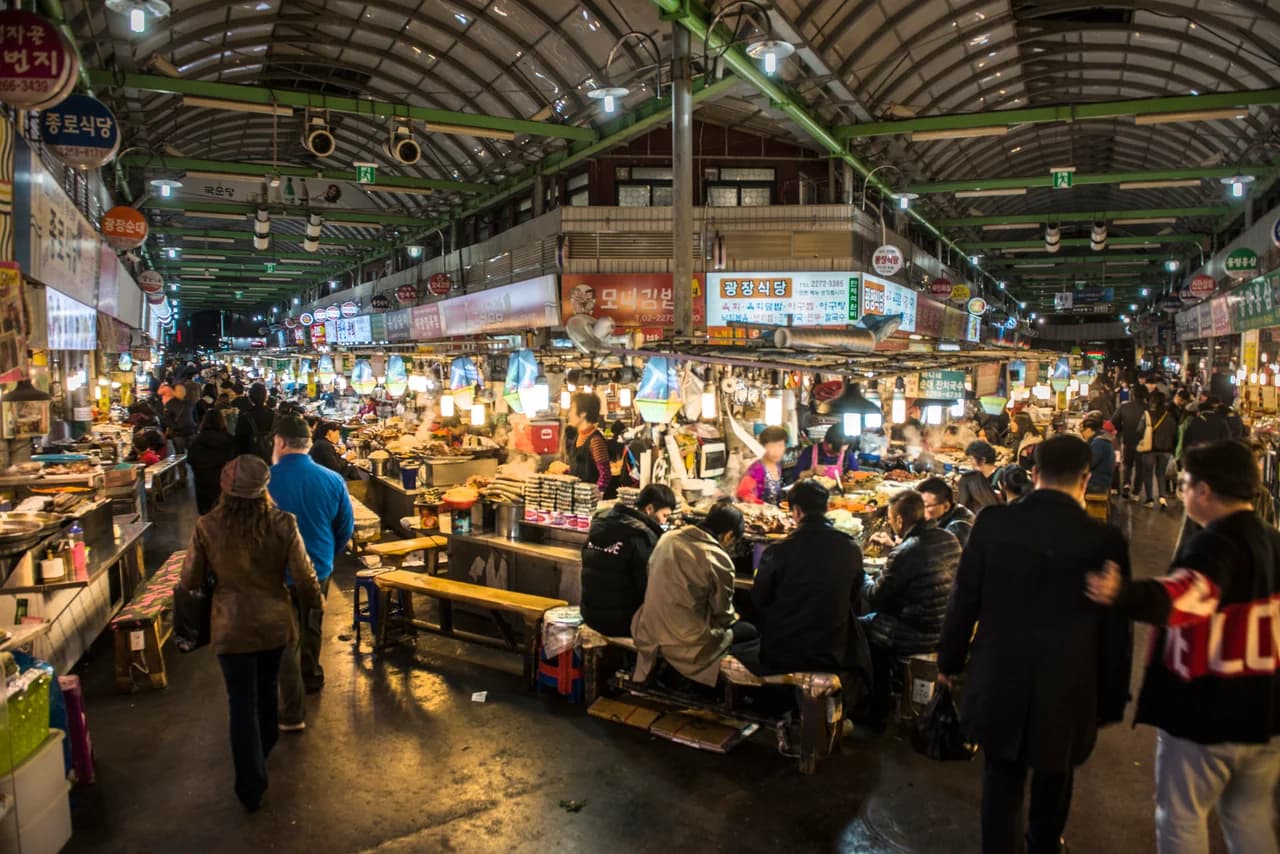
The compact checklist is people, portions, ingredients, total, ordering system and payment. On a busy market visit, use the same checks with one stall before moving to the next. A few clear answers make the experience easier for both sides. Enjoy the food without treating every unfamiliar custom as a test you must pass perfectly.
Market tour and final checks
The linked Gwangjang tour includes English guiding, tastings and drinks, not hotel pickup. The seller does not promise full vegetarian suitability and lists vegans, people with gluten intolerance and pregnant women as unsuitable. Confirm your requirements before buying; a food tour is not allergy-safety certification or a general restaurant booking.
Check the chosen date and option for the meeting point, start time, age/access needs, cancellation deadline and actual tasting plan. A tour is optional if you want guidance through a market, not a requirement for ordering independently. This link does not certify today’s inventory or final quote. Answer the checklist before sending a food order.
- Confirm seating, queue and staff/kiosk sequence
- Check solo seating and minimum servings separately
- Check unit, rice and extra ingredients
- Explain avoided ingredients and shared preparation before ordering
- Ask about side-dish and noodle additions
- Confirm actual card, total and split payment
- For a market tour, check diet, meeting and cancellation per option
Sources & verification
Prepared by Gollaba using the sources below. Planning suggestions are editorial judgments, not claims of a personal visit.
- Korea Tourism Organization — Korean restaurant use ↗Source checked:
- Korea Tourism Organization — Vegetarian travel ↗Source checked:
- Korea Tourism Organization — Money and exchange ↗Source checked:
- CDC — Restaurant food allergy practices ↗Source checked:
- GetYourGuide — Seoul Street Food Market Tour 535402 ↗Source checked: