1. Choose your priority before your month
Start with the experience you would regret missing: comfortable city walks, coastal time, flowers, foliage or a winter activity. Then decide which discomfort you can accept. A traveler who dislikes humidity needs a different compromise from someone whose only holiday falls in August. Korea has four seasons, but a season is not a guarantee about every day within it.
For a city-first itinerary, we would shortlist spring or autumn and keep an indoor alternative. If your dates are fixed, build around the likely conditions rather than postponing the whole trip in search of a perfect month. Compare Seoul and Busan separately; a national average does not describe both hotel doorsteps.
| Season | Planning emphasis | Do not assume |
|---|---|---|
| Spring · March–May | Layers; movable park day | Guaranteed full bloom |
| Summer · June–August | Indoor breaks; rain backup | Every day rainy or swimming permitted |
| Autumn · September–November | Actual-week forecast; foliage check | Peak colors or low prices everywhere |
| Winter · December–February | Warm clothing; daylight plan | Snow or resort operations guaranteed |
2. Spring: layers and flexible flower plans
March to May is the conventional spring grouping, not a single temperature band. Plan removable layers for a day that moves between outdoors, trains and heated interiors. Comfortable shoes and a light outer layer are more useful than packing only for the warmest photograph you have seen. Check the forecast again near departure rather than buying a wardrobe from a seasonal label.
Treat cherry blossoms as a welcome possibility, not the only reason your itinerary works. Bloom timing changes by region and year; a published forecast is not confirmation of full bloom. Keep a park or neighborhood day movable and make sure the same outing still appeals without flowers.
3. Summer: make the middle of the day adjustable
June to August generally brings heat and humidity, with rainy-season conditions affecting some plans. This does not mean it rains continuously on every summer trip. Our practical approach is a shorter outdoor block, an indoor visit or proper meal break, and another optional outing if conditions allow. Carry water and a compact rain layer without turning your day bag into a second suitcase.
Check weather warnings before coastal, river or mountain activities. A beach being scenic does not mean swimming is allowed at that moment. Follow closures and on-site instructions; swap exposed activities rather than trying to recover the cost of a booking by ignoring unsafe conditions.
4. Autumn: do not confuse a season with peak foliage
September to November spans a substantial change in conditions. Early-season warmth and later-season cold require different packing, so use the forecast for your actual dates. A light jacket may suit one outing while another needs a warmer layer. Keep room for a coat in your day bag instead of assuming an afternoon temperature lasts until dinner.
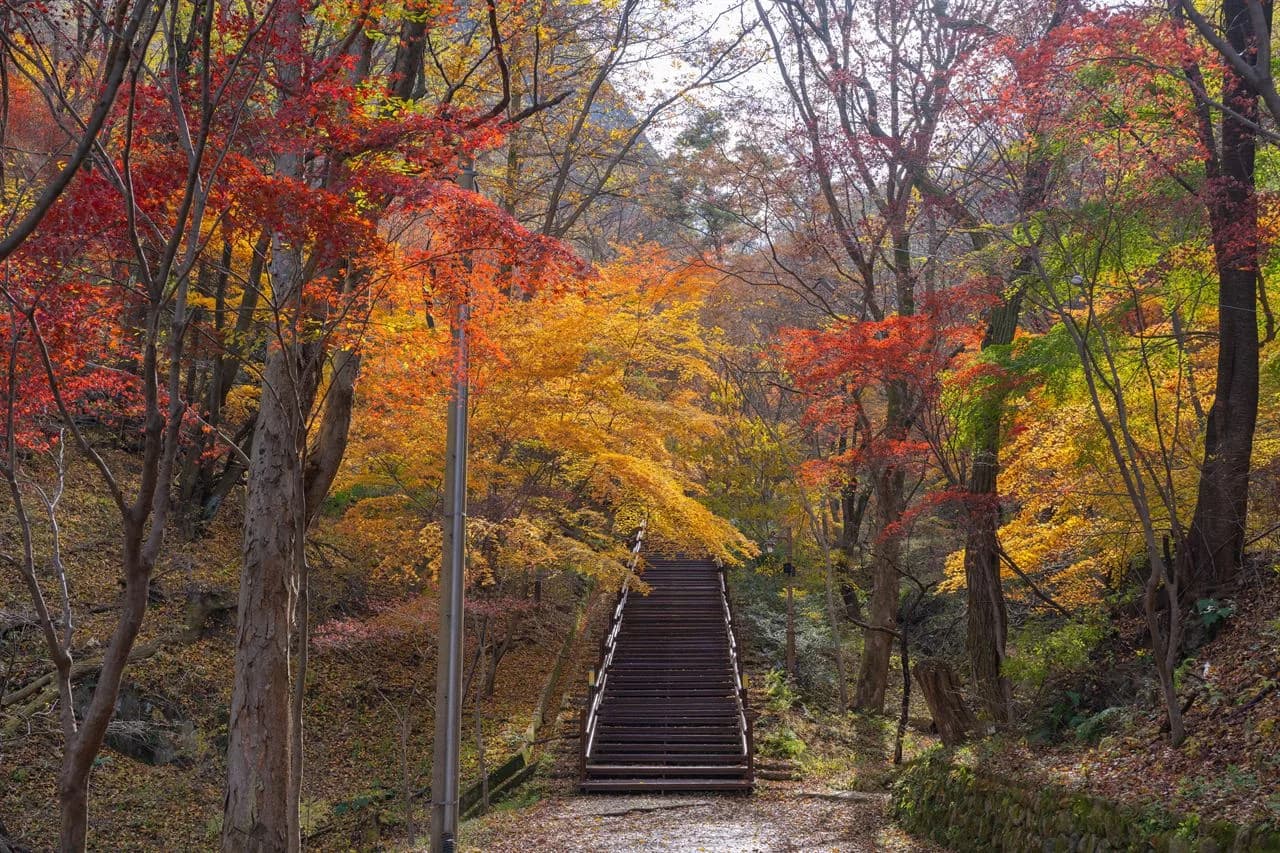
If foliage is important, monitor current observations and choose a reachable backup park. Do not promise yourself identical colors in Seoul and a mountain area on the same date. Check holiday and event calendars before nonrefundable hotel or train purchases; this guide does not claim that autumn automatically means fewer people or lower prices.
5. Winter: plan for cold even without snow
December to February is the conventional winter period. Build outfits around warm layers, a wind-resistant outer layer and shoes suited to the conditions you expect. Gloves and a hat can be easier to manage than repeatedly shortening every walk. Leave time to dry wet clothing and avoid planning several long outdoor stops without somewhere to warm up.
Snow in your destination is not guaranteed. A winter sports booking also has its own operating status, equipment rules and skill requirements. Check those directly rather than treating a snowy promotional image as a current report. In cities, prioritize outdoor sightseeing during usable daylight and keep the evening close to a transport route you understand.
6. Use a two-stage packing and booking check
Before booking, check the broad season, public holidays and cancellation terms. Shortly before departure, check the Korea Meteorological Administration forecast for each overnight city and any outdoor activity area. Then adjust layers, footwear and your order of sightseeing. Weather observations are more useful close to travel than a confident seasonal slogan months earlier.
Keep one indoor option on the same side of town as your main outing, and verify that it is open. The National Museum of Korea is a useful example, but even a free indoor attraction has closed dates and gallery changes. If rain changes your plans, substitute one cluster; do not cross Seoul repeatedly to recover every item on the original list.
Sources & verification
Prepared by Gollaba using the sources below. Planning suggestions are editorial judgments, not claims of a personal visit.
- Korea Tourism Organization — climate ↗Source checked:
- Korea Meteorological Administration — forecast and warnings ↗Source checked:
- National Museum of Korea — visitor information ↗Source checked: