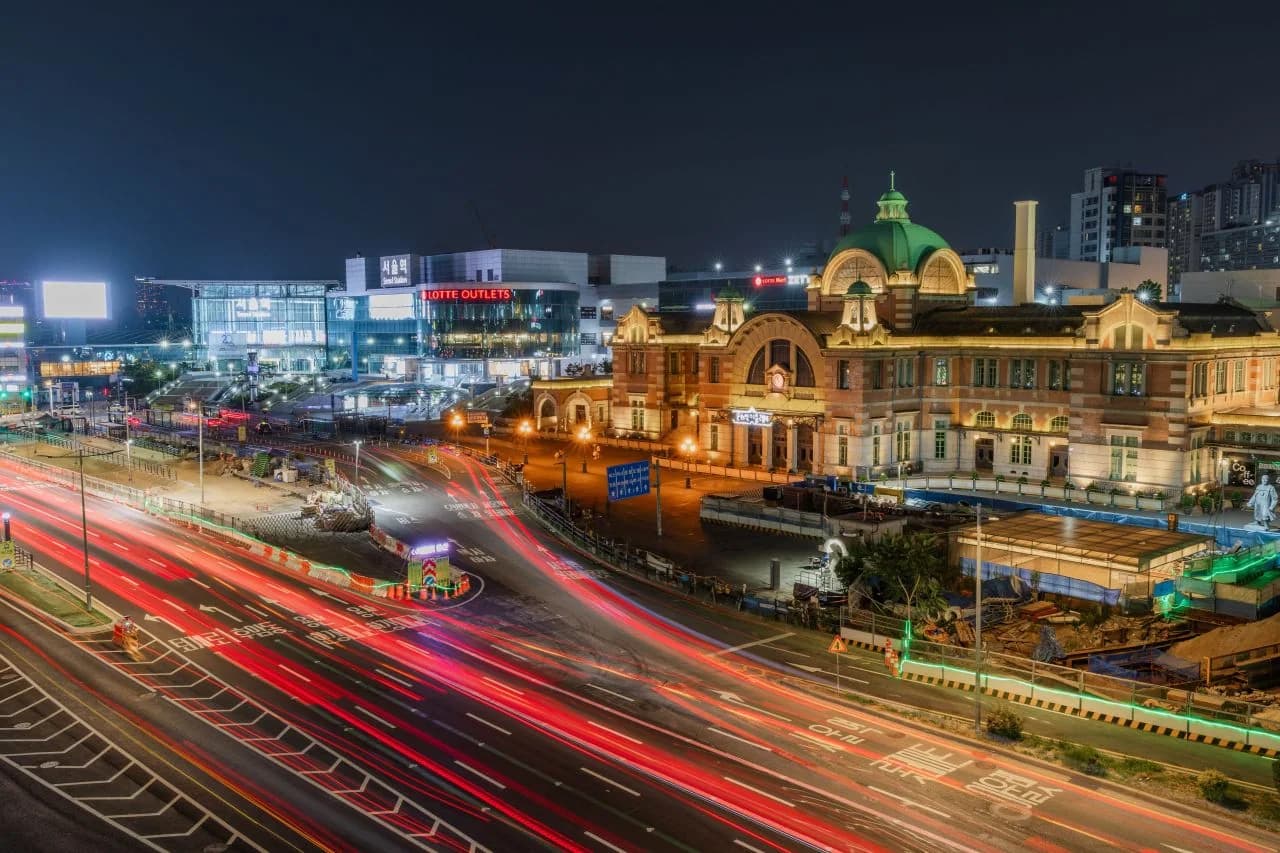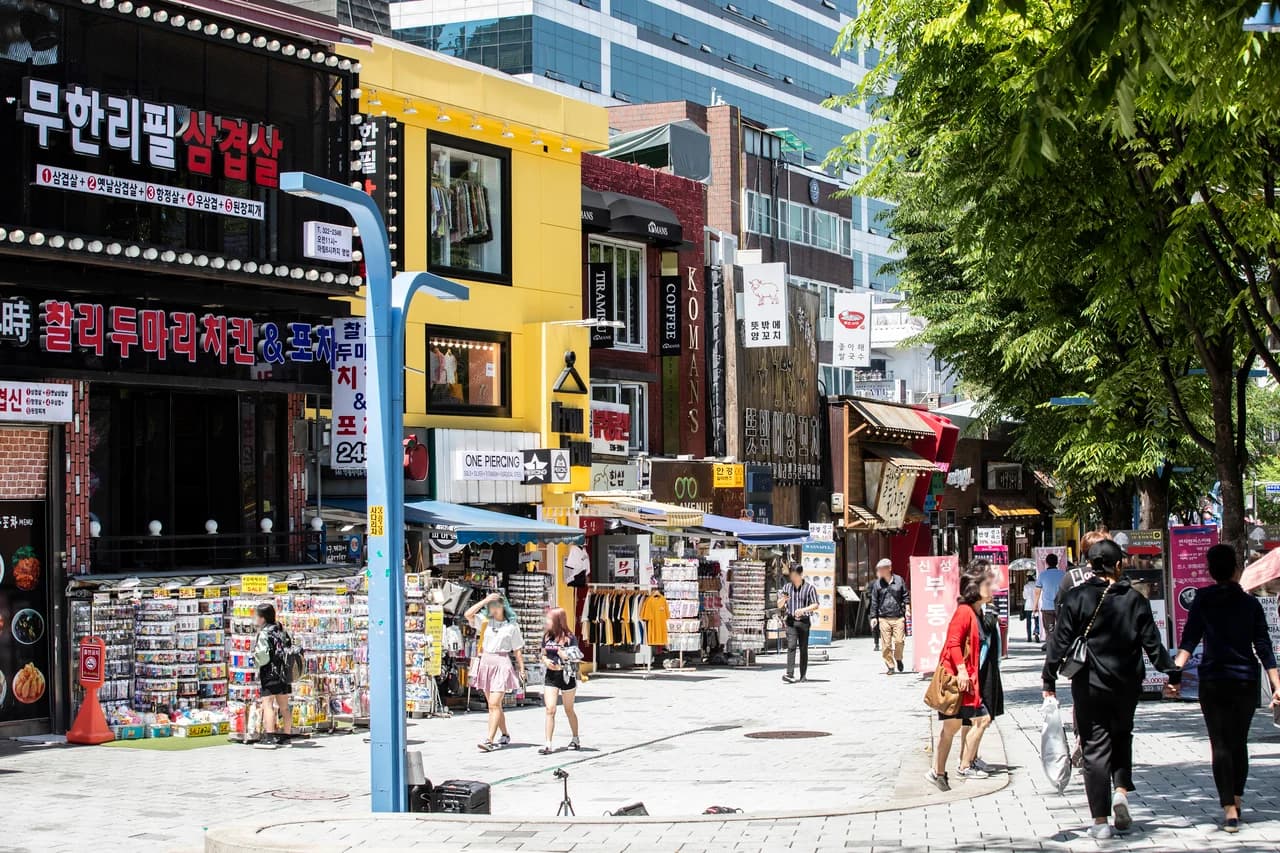
Make a shortlist from three anchors
Write down your most important daytime destination, the area where you expect to spend evenings, and your arrival/departure station. Place three candidate hotels on a map against those anchors. Compare transfers and final walks, not only the distance drawn in a straight line.
Our practical rule is to favor the area where you will finish several days. One airport journey can justify a paid transfer; repeated cross-city journeys may affect the whole trip. For a short stay, keep one base unless a late arrival or early flight makes an airport night worthwhile. Moving hotels has its own checkout, luggage and check-in cost in time.
| Base | When to compare it first | Check before booking |
|---|---|---|
| Myeongdong / Euljiro | Central sights and shopping | Which station actually suits the hotel entrance |
| Jongno / Insadong | Palaces and historic streets | Lane entrance and actual hanok room facilities |
| Hongdae | Western evening plans and airport rail | All-stop route, station entrance and room noise |
| Gangnam / Samseong | Repeated COEX or southeastern plans | Daily journeys and the return route |
| Jamsil | Activities around Jamsil | Actual route between your accommodation and activity |
Myeongdong/Euljiro or Jongno/Insadong?
Myeongdong/Euljiro is our starting point for a trip balancing central sightseeing and shopping. Seoul's tourism office identifies access through Myeongdong Station on Line 4 and Euljiro 1-ga on Line 2. They are different stations: a hotel using “Myeongdong” in its marketing may be much more convenient from one than the other.
Jongno/Insadong is a sensible alternative when palace visits and the historic center shape the trip. Check the exact lane, entrance and nearest usable station. If considering a hanok stay, ask about the bed setup, heating/air-conditioning, private bathroom, stairs and luggage space instead of assuming every traditional-looking property provides the same experience.
Hongdae, Gangnam/Samseong and Jamsil
Hongdae is a useful candidate if your plans cluster in the west and you value the AREX All-stop connection at Hongik University. Check your hotel's distance from that station entrance, not merely “Hongdae.” If sleep matters more than late-night activity, ask about rooms away from the street and look for recent noise-specific reviews.
Gangnam/Samseong is worth prioritizing for repeated COEX-area or southeast-Seoul appointments. Jamsil is an alternative if your plans center on its attractions. Neither label means a short trip to every palace or western district. Test your actual daily routes. We do not label an entire neighborhood universally quiet, cheap or safe: individual streets and properties vary.
Compare the cost of the stay, not a district stereotype
Use identical dates, occupancy and cancellation terms to compare hotels. Add taxes and mandatory charges, breakfast if useful, extra-person or child charges, luggage storage if charged, and the expected transport from your chosen base. A lower nightly rate may not save money if it creates several taxis.
For example, a hotel quoted at KRW 100,000 per night versus one at KRW 120,000 differs by KRW 60,000 over three nights. Those are arithmetic examples, not surveyed Seoul prices. Decide whether the cheaper address is worth that trade-off using real quotes. Do not compare a non-refundable room with a flexible booking as if they were the same product.
Families, luggage and accessibility: check the building
Ask whether the entrance and route to the room are step-free, whether an elevator reaches your floor, and whether the room fits opened suitcases. A hotel's elevator does not prove the nearest subway exit has one. Families should confirm allowed occupancy and the actual bed arrangement, not just a room name such as “family.”
For an apartment or self-check-in property, obtain the entry method and support number before arrival. Confirm whether luggage can be left before check-in or after checkout; do not build a sightseeing day around unconfirmed storage. If you need specific accessibility support, get the details in writing from the property rather than inferring them from photos.
A booking order that avoids expensive surprises
First choose the neighborhood, then shortlist exact addresses, check arrival and evening routes, and compare complete room terms. Before paying, confirm the check-in deadline, cancellation time zone, luggage policy and the actual provider responsible for the booking. Keep confirmation details available offline.
If your flight is late, contact the property using the booking's support channel; do not assume reception is staffed all night. If two areas still seem equally good, choose the property with the clearer arrival instructions and the more useful daily route. You do not need a private city tour simply because you stay outside the historic center; compare independent transit first.
Before finalizing a room, send the property your actual arrival time and any essential requirement: lift access, the number of beds, late check-in or luggage handling. Keep its answer with the booking. Look at the entrance on a map instead of relying only on a district label, and compare the room’s final conditions rather than the cheapest headline rate. If an important requirement is unanswered, treat it as unresolved; a pleasant neighborhood photograph cannot confirm room size, accessibility or overnight staffing.
- Saved the exact entrance and daily return route.
- Compared the same guests, rooms and dates including taxes and mandatory charges.
- Confirmed actual beds, occupancy and any essential access needs.
- Have an arrival-time entry method and a support contact.
- Confirmed luggage storage availability and cost.
- Saved the cancellation time zone, booking and written replies.
Sources & verification
Prepared by Gollaba using the sources below. Planning suggestions are editorial judgments, not claims of a personal visit.
- Korea Tourism Organization ↗Source checked:
- Seoul Tourism Organization ↗Source checked:
- AREX — All-stop route ↗Source checked:
- Starfield COEX Mall — Current operator site ↗Source checked:
- Korea Tourism Organization ↗Source checked: