Choose your approach from Tokyo
Separate an Odakyu journey from Shinjuku towards Hakone-Yumoto from a trip to Odawara on another railway followed by local Hakone travel. Include the journey from your accommodation to the departure station. For the Romancecar, check the limited-express reservation and additional charge as well as the base fare.
A JR or Shinkansen ticket to Odawara is not automatically included in the Hakone Freepass. If an existing rail pass covers your Tokyo–Odawara journey, compare a locally starting Freepass with individual local tickets rather than paying for an unnecessary second approach journey.
Freepass price versus trip cost
The official table checked on 8 October 2026 lists adult two-day passes at ¥7,100 from Shinjuku and ¥6,000 from Odawara. Using one for just one day does not automatically halve the price. Decide which local transport you will use, then compare the pass with the sum of individual tickets for that route.
Neither amount is a total holiday budget. Add meals, admission fees, Romancecar charges and travel outside the covered area. Check designated routes, and do not assume Izu-Hakone buses are covered. A discount at a facility is not the same as free admission.
| Item | Coverage |
|---|---|
| Designated Hakone transport | Only designated routes and operators |
| Shinjuku–Odawara return | One return on the applicable Odakyu-inclusive pass |
| Romancecar limited-express charge | Extra |
| Meals and all admissions | Not automatically included in the standard Freepass |
Priorities before a full loop
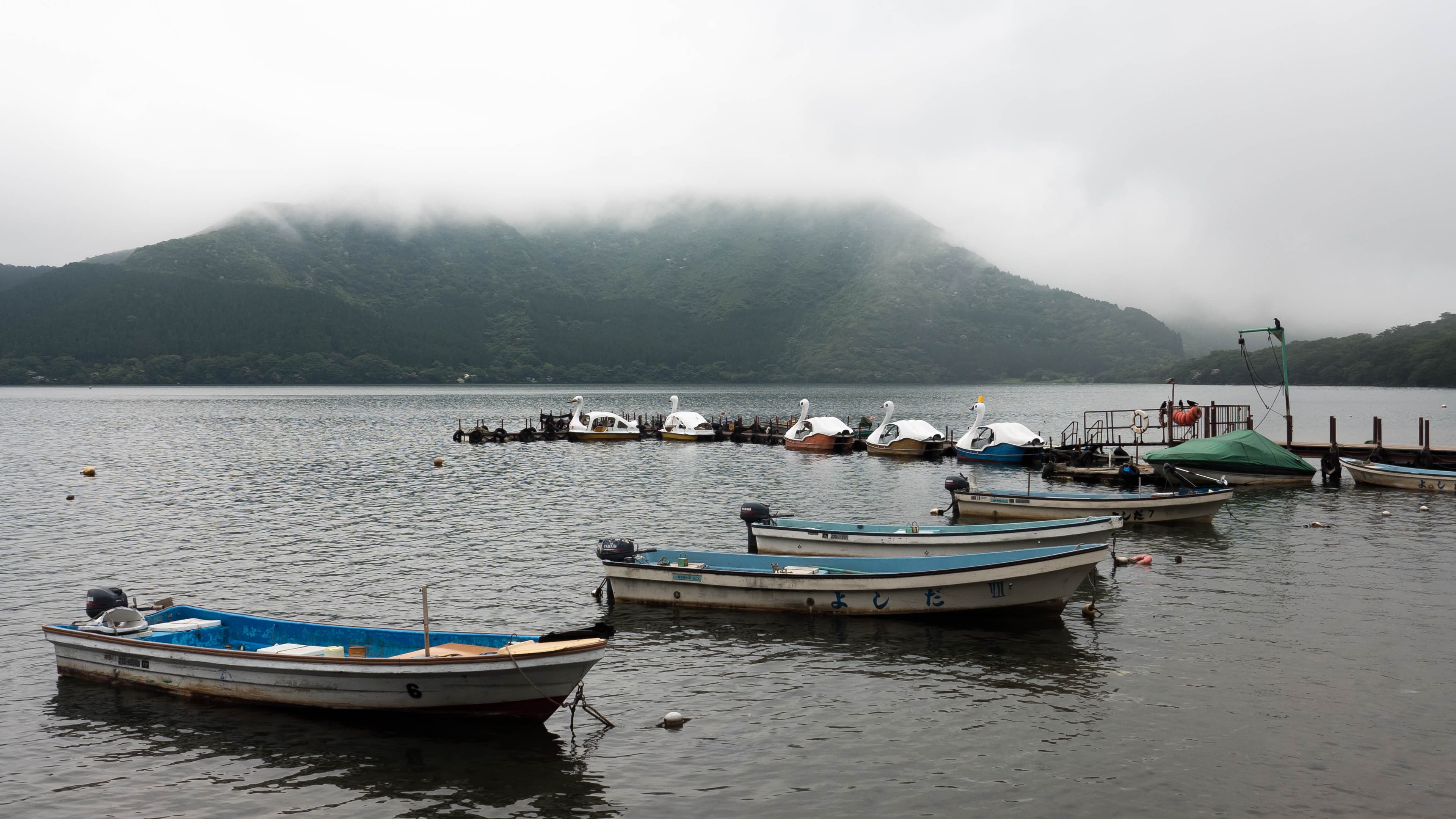
The basic circuit is Hakone-Yumoto → Gora → Sounzan → Owakudani → Togendai → a Lake Ashi port → bus back towards Hakone-Yumoto. It connects mountain rail, cable car, ropeway, boat and bus, so waiting on one leg affects the next. The table is a priority plan, not a timetable.
For a first visit, choose whether mountain travel or the lake matters most. Add a museum or onsen only if time remains. Independently combining the whole circuit with several towns around Mount Fuji is a different, more demanding trip.
| Stage | Priority | What to cut |
|---|---|---|
| Before departure | Check service status and return train | Redesign the loop if a service is closed |
| Local morning | Head to the main mountain section or lake | Extra indoor attraction |
| Local afternoon | Finish the priority stop and secure the return connection | Extra onsen or lengthy shopping |
If the ropeway or boat stops
Check service status before leaving Tokyo and again before committing to the next local leg. With the ropeway suspended, shorten your visit towards Hakone-Yumoto and Gora, or consider the lake using buses that are actually running. Do not assume a replacement bus is automatically available or immediately boardable.
In strong wind or fog, a working return route matters more than waiting indefinitely for a Fuji view. If you substitute a museum, check that day’s opening, last admission and separate fee.
Read the Owakudani safety advice
Read the volcanic-gas precautions before planning photo stops. The operator warns about certain respiratory and heart conditions and provides advice for people who may be more sensitive, including pregnant travellers and very young children. This guide is not medical clearance for an individual to ride.
If a warning applies to your party, consult the operator’s current advice and a clinician where appropriate. Decide on a route that omits the affected section before travelling rather than pressuring a sensitive family member to finish the mountain loop.
Independent trip or Tokyo tour
Travelling independently lets you adjust stops and the return time, but you manage every connection. The Gollaba Fuji, Hakone, Owakudani and Lake Ashi tour below covers a broader itinerary and is not identical to this independent Hakone circuit.
The checked listing includes a one-way ropeway ride; the Lake Ashi cruise and lunch cost extra. Recheck the selected option for bus transport, guide language, ropeway and boat inclusion, meals and the substitute itinerary in poor weather. Do not buy a Freepass to cover transport already included in a tour. A recently checked displayed price is not a final quote for your date, party and option.
Common questions
Can I use the Freepass on a day trip? Yes. Its standard validity is two or three days, so judge its one-day value against the actual rides you plan to take.
Will I definitely see Mount Fuji? No. Visibility depends on weather; the transport pass does not guarantee a view. Prefer a day with a flexible return over a flight day or a final Tokyo day packed with fixed reservations.
Final departure checks
Save the route map, but do not use an old screenshot as proof that a service is running. Work backwards from the return train and last local connection, and decide which optional stop you will drop if the day slips.
- Check Shinjuku-start versus Odawara-start coverage
- Budget separately for Romancecar, meals and admissions
- Read each service’s status and volcanic-gas precautions
- Confirm a closure fallback, last connection and return train
Sources & verification
Prepared by Gollaba using the sources below. Planning suggestions are editorial judgments, not claims of a personal visit.
- Hakone Navi / Odakyu — Hakone Freepass ↗Source checked:
- Odakyu — Hakone Freepass official route map ↗Source checked:
- Hakone Navi — Hakone Ropeway ↗Source checked:
- Hakone Navi — transport service status ↗Source checked:
- Hakone Ropeway — volcanic-gas safety precautions ↗Source checked:
- GetYourGuide / TAIHOU — Fuji and Hakone tour conditions ↗Source checked: