Pick the view before the departure time
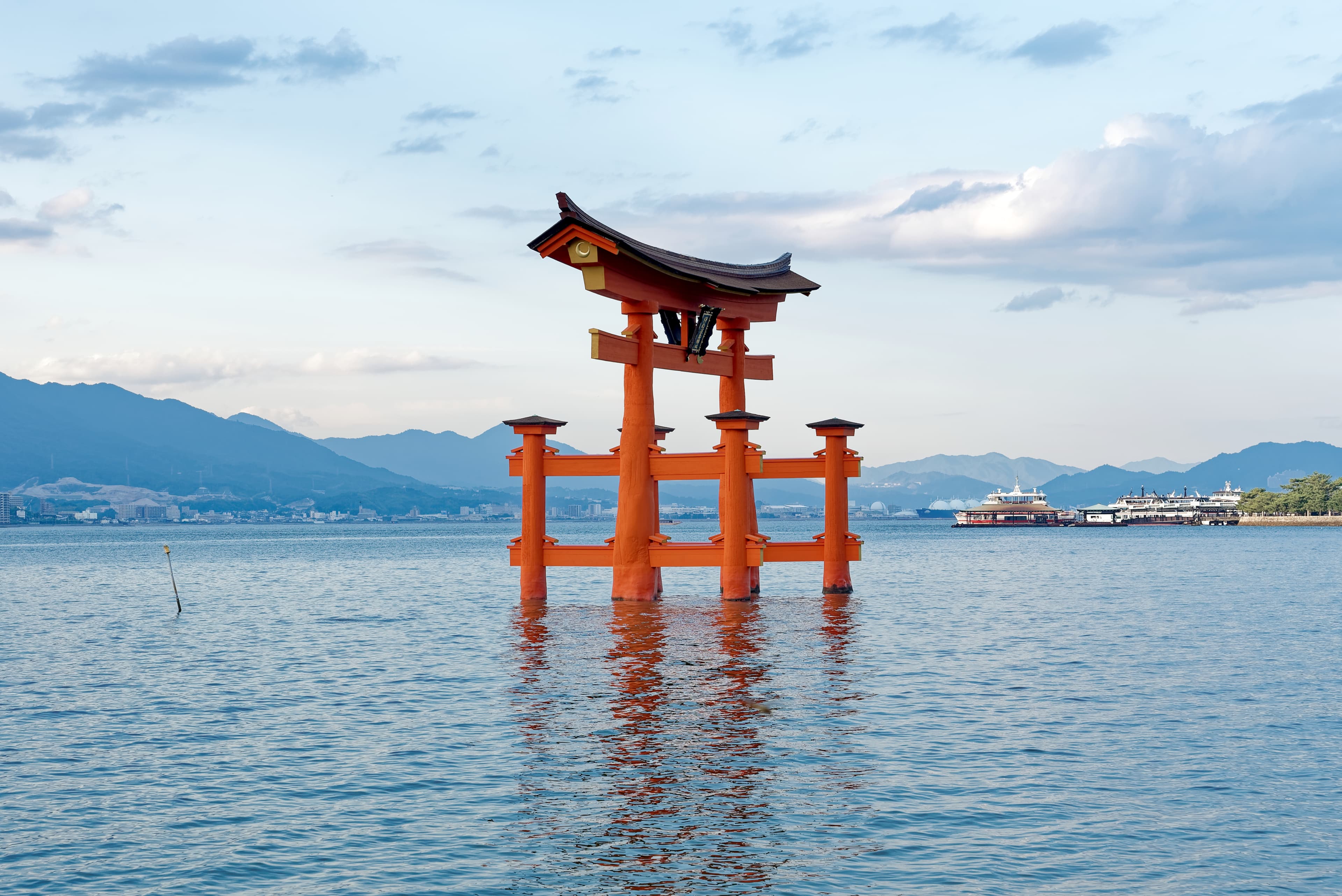
The tourism association gives approximate tide levels of 250 cm or higher for the floating-shrine view and 100 cm or lower for approaching the torii on foot. Low tide alone does not promise an exposed route. Select your actual travel date in the official calendar and read the level as well as the time.
These are planning indicators, not permission to enter the shore. The table uses Hiroshima Port predictions; local timing and conditions can differ. Follow barriers and staff directions, and do not pursue a photograph through water or slippery ground. If the two views are hours apart, choose a priority instead of treating both as compulsory.
Keep the ferry separate from the tax
Miyajimaguchi is the mainland departure point, not the island. Budget transport to the port separately. The example below is for one ordinary adult without a pass, exemption or annual tax payment, making one island entry and return. It is not the fare for a fast boat from another port.
If using a rail pass, check its precise name and eligible ferry operator before boarding. Do not assume a neighbouring operator accepts it, or that a covered fare also settles the visitor tax. Show the pass at the ticket office if uncertain. Save the return operator and boarding location with the ticket.
| Item | JPY |
|---|---|
| Outbound ferry | 200 |
| Return ferry | 200 |
| Tax for one island entry | 100 |
| Example subtotal | 500 |
Admission is another purchase
The checked ordinary adult rates are ¥300 for the shrine, ¥300 for the treasure hall, or ¥500 for their combined ticket, sold at the shrine entrance. That combined ticket is unrelated to the ¥500 ferry-and-tax example. Buy for the places you intend to enter rather than counting every nearby attraction as mandatory.
The shrine lists 06:30–18:00 for March 1–October 14, with earlier closing in late autumn and winter. Sunset and high tide are not admission deadlines. Check the calendar and exceptional notices for your visit; practical walking shoes also suit the gaps in the corridor flooring.
Treat Mount Misen as a separate activity
The upper ropeway station is not the summit. The operator describes a roughly one-hour standard circuit from Shishiiwa Station via the summit and warns of slopes and stone steps. That is not a guaranteed time for your group. A shrine-and-waterfront day is a complete alternative, not a failed mountain itinerary.
Advance ropeway reservations apply on designated dates, currently including September 19–22, 2026. Check your date, downhill closing and accessibility restrictions before paying. There are stairs and restrictions on wheelchairs and strollers; do not treat this as a step-free viewpoint. If wind stops service, use a low-level alternative rather than improvising a mountain descent.
Build backwards from your return
A workable outline is ferry, shrine area at your chosen tide, lunch and an island walk, then a buffered return. If adding the mountain, anchor the less flexible tide window and ropeway deadline before arranging the rest. This is an editorial itinerary, not a measured promise about queues or restaurant service.
Save five things: your date’s tide, shrine closing, any ropeway reservation, return ferry operator and onward mainland transport. Collecting luggage or catching a Shinkansen belongs in that same return calculation. Keep an earlier departure option instead of relying on the last possible boat to make every connection.
Sources & verification
Prepared by Gollaba using the sources below. Planning suggestions are editorial judgments, not claims of a personal visit.
- JR West Miyajima Ferry — fares ↗Source checked:
- Hatsukaichi City — Miyajima transport ↗Source checked:
- Hatsukaichi City — visitor tax ↗Source checked:
- Miyajima Tourism Association — reading tides ↗Source checked:
- Miyajima Tourism Association — tide calendar ↗Source checked:
- Itsukushima Shrine — admission ↗Source checked:
- Miyajima Ropeway — operating information ↗Source checked:
- Miyajima Ropeway — walking route ↗Source checked: