
Choose the problem your base should solve
With Patong, decide whether you want shopping and evenings out alongside the beach; a room near activity is a separate question from a room suitable for sleep. In Karon and Kata, not every property opens straight onto sand. A Kata Noi booking should not be treated as a room in the centre of Kata Yai. From Old Town, accept beach-day transport as part of the itinerary. The table ranks no district universally; it gives starting points for different trips.
| Area | Reason / check |
|---|---|
| Patong | Evening choices / room noise and return route |
| Karon | Beach time / actual hotel-to-beach access |
| Kata / Kata Noi | Beach focus / exact bay and slopes |
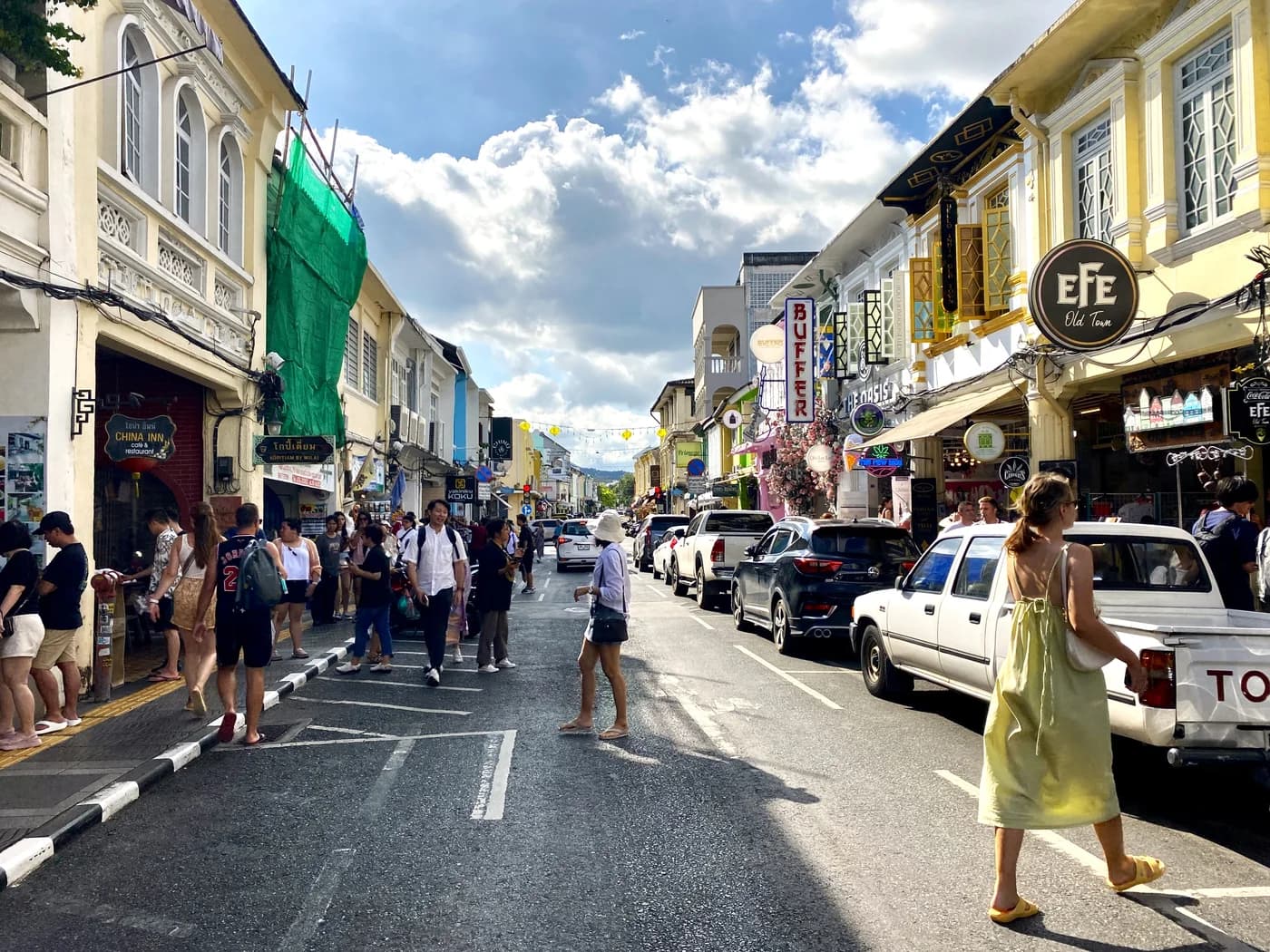
| Old Town | Streets, food, museums / beach-day rides |
Inspect entrances, not a straight line on a map
A short line between hotel and beach can hide a different exit, a road crossing, steps or a slope. If using a stroller or mobility aid, ask about the route from the room to reception, dining and the pool as well. A nearby bus stop is useful only after checking the return direction and operating times. For several island trips, check whether the hotel is inside the operator’s pickup area or needs a supplement or shared meeting point before committing to the room.
Compare the stay, not just the nightly rate
Match room count, nights and breakfast terms when comparing two hotels. A cheaper room can require a car every evening or an extra-bed payment for your party. Conversely, Old Town may fit better if beach visits are occasional rather than daily. Frequent hotel changes on a short stay also create luggage-storage and check-in gaps. First test a single-base plan unless changing areas solves a specific problem. Keep optional excursions outside the accommodation total so you can see what actually causes a difference.
Keep a land-based alternative
An attractive beach photograph does not establish waves or swimming conditions on your dates. Follow local warnings and staff instructions, and check what you can do at the property if sea access is unsuitable. A promoted view may belong to one room category, not the room being booked. Save the booked category, cancellation terms and late-arrival contact. Once the area is chosen, compare two or three properties on matching terms rather than restarting a whole-island search every time a discount appears.
- Check entrances, slopes and room position
- Include evening rides and tour pickup costs
- Save room category, cancellation and late-arrival terms
Sources & verification
Prepared by Gollaba using the sources below. Planning suggestions are editorial judgments, not claims of a personal visit.
- Tourism Authority of Thailand — Phuket sights and neighbourhoods ↗Source checked:
- TAT Japan — Kata Beach ↗Source checked:
- TAT Japan — Karon Beach ↗Source checked:
- Phuket Smart Bus — route timetable ↗Source checked: