Choose the departure city and onward destination first
Access from Takayama, Kanazawa, Toyama and Nagoya does not mean one interchangeable bus route. If the village is a stop while changing hotels, secure both arrival and onward departure. Assuming you can board any bus after your walk can leave you unable to reach the next hotel when services are full.
For a return visit, verify the date and direction; for an onward trip, record the exact destination terminal. Allow extra time to store and retrieve large luggage, and do not assume unlimited luggage capacity. Nohi Bus warns that it may not accommodate every large bag and instructs passengers to carry power banks in the cabin rather than the luggage compartment.
A mobile ticket for a non-reserved bus does not reserve a seat
Nohi's current timetable marks reservation-required services with R and describes the others as non-reserved. A mobile ticket sold for a non-reserved service is not a seat reservation on a particular departure. Before paying, establish whether the ticket actually guarantees a place on the return bus you need.
Use the sales channel linked by the operator to confirm the date, departure and seat on a reserved service. Jointly operated buses or transport passes can have different reservation procedures. Ask: which departure and seat does this ticket secure? Prepare the mobile ticket and booking reference so you can retrieve them even with an unreliable internet connection.
A normal driving time is not the whole journey
The operator's normal travel estimate from Takayama is not an arrival guarantee. Its current page warns that parking congestion, heavy snow and expressway closures can cause delays of two hours or more. A long-distance train or flight immediately after returning from the village therefore needs a generous connection margin.
If arrival is late, retain your most important public-house visit or village walk and shorten the viewpoint extension. Changing a return bus and changing the next hotel have different costs; identify a realistic alternative if you miss the last usable service. Do not ignore a return reservation merely to complete every stop in the original plan.
Village streets, public houses and the open-air museum are different visits
Not every gassho-roofed house is a visitor exhibition. Separate walking public village streets from admission to an open house or the open-air museum. Choosing one house to understand its construction, then walking the surrounding area, can give the day a clearer purpose than buying several house tickets consecutively.
Doors, yards, rice fields and residents' working passages are not places to enter without permission for photographs. Do not photograph people at close range while they work without consent. Avoid blocking a road to recreate a famous composition, and obey smoking and fire restrictions that protect the thatched roofs.
| Visit | Conditions to check |
|---|---|
| Village walk | Public visiting hours and residents' private spaces |
| Open house interior | Individual fee, opening, footwear and photography |
| Open-air museum | Separate admission, location and visiting time |
| Viewpoint | Exact viewpoint, access and return route |
| Winter illumination | Event date, reservation, special access and return transport |
Add a viewpoint only when the round trip fits
Travel from the village to a viewing point is not an automatically included, free, quick ride. Village guidance describes a paid shuttle and walking access, with possible interruption due to weather or road conditions. Confirm the actual viewpoint name: access and special-event restrictions can differ between places.
Include the shuttle wait and descent before deciding whether you can still catch the return bus. In snow, ice or heavy rain, walking routes are also subject to local controls. If the viewpoint is impractical, finish with a shorter walk along open village streets, looking at roofs and waterways. One particular panorama photograph is not the only measure of a worthwhile visit.
Winter illumination is not ordinary sightseeing every night
The village directs general sightseeing to daytime and restricts ordinary nighttime visits to protect residents' daily lives. Winter illumination has separate booking and access rules; a normal bus ticket or a hotel booking alone does not guarantee participation. Snowy event photographs online should not be described as the scene on every winter evening.
For a linked Nagoya departure tour, compare actual village dwell time, additional destinations, public-house admission, meals and guiding language. Separate an illumination-event product from an ordinary daytime tour. A short group stop and an independent walking visit are different experiences, so the headline price alone cannot determine which is better for you.
Before booking the buses
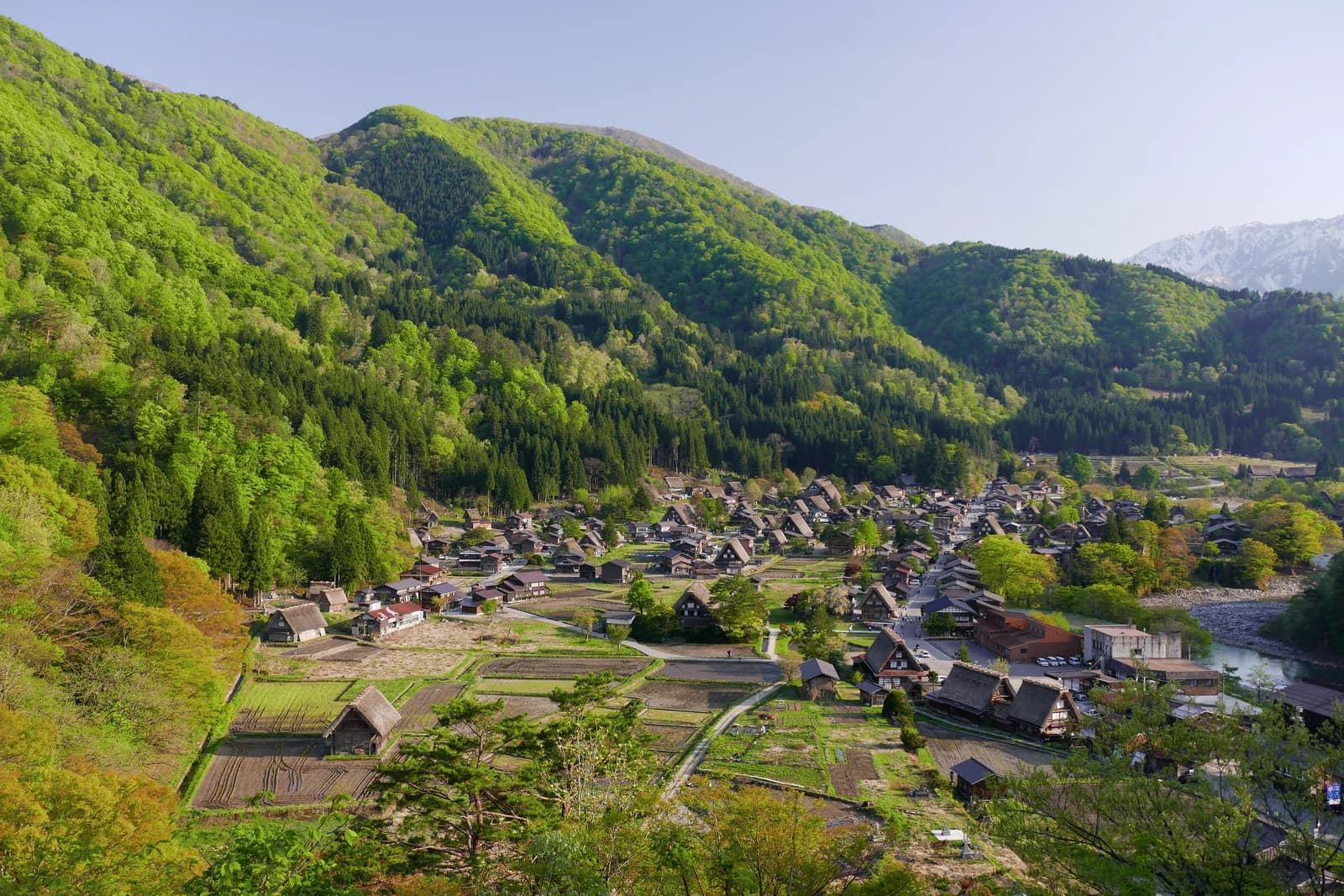
Shirakawa-go is a World Heritage village in which people live. Independent visits depend on the right departures and a delay alternative; tours depend on actual visiting time and walking scope. Choose according to what you want to do on site, not the longest list of destination names.
- Secure outward and return or onward transport together
- Distinguish a reserved seat from a non-reserved ticket
- Allow a margin before the next long-distance connection
- Choose a public house and practical walking area
- Recalculate viewpoint travel against your return departure
- Take litter away and follow private-space, fire and drone rules
Sources & verification
Prepared by Gollaba using the sources below. Planning suggestions are editorial judgments, not claims of a personal visit.
- Nohi Bus · current Shirakawago route ↗Source checked:
- Shirakawa village · travel planning ↗Source checked:
- Shirakawa village · responsible tourism ↗Source checked: