Count usable time first
Begin the first sightseeing block only after arrival procedures, baggage, the airport journey and check-in. Avoid a difficult-to-cancel timed booking on an uncertain arrival day. This guide proposes a manageable sequence; it is not an operator timetable.
Mark the longest usable day and put your highest-priority paid visit there. If you arrive late or leave early, reduce the number of stops. Changing hotels does not create extra sightseeing time once packing and travel are included.
| Day | Anchor | Remove if needed |
|---|---|---|
| 1: Arrival | Hotel and a Minami meal | Extra shopping |
| 2: Main sightseeing | Castle → Umeda | Optional observatory |
| 3: Departure planning | Tennoji if time permits | Skip sightseeing for an early flight |
Day one: settle in, then explore Minami
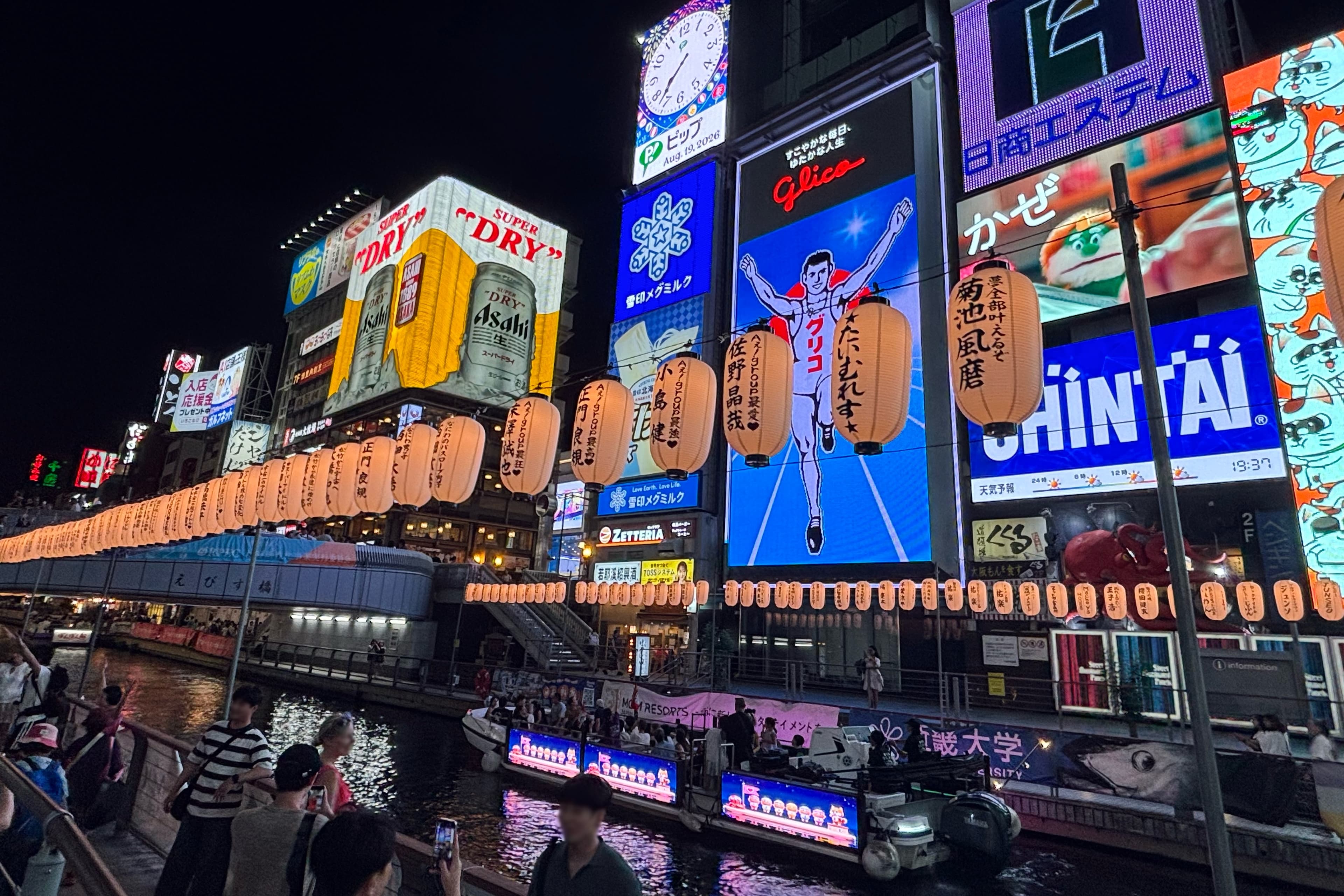
After storing bags or checking in, begin with a meal and a short walk around Namba and Dotonbori. Extend towards Shinsaibashi if energy and time allow. A late arrival can end with dinner alone; individual shops and restaurants do not all keep the same hours.
Do not turn one signboard photograph or a queue at one restaurant into a compulsory checkpoint. Keep paths clear, save your return station and hotel address, and prepare for the next day. That is a useful arrival day without a long list of completed sights.
Day two: Osaka Castle, then Umeda
Start around Osaka Castle and decide whether the museum interior or an exterior-and-surroundings visit is your priority. Museum exhibits need their own time; do not count both choices as the same brief photo stop. Move to Umeda later and group dining or shopping there.
If a viewpoint matters, check Umeda Sky Building’s date-specific admission and outdoor-area guidance. Match any booking to weather, daylight and available entry times. The itinerary does not guarantee sunset visibility or an uncrowded deck.
Day three: Tennoji/Abeno, or departure preparation
With enough time, group a walk and meal in the Tennoji/Abeno area and keep the Abeno Harukas observatory optional. If you already visited a viewpoint, a second one is not mandatory. Choose by the experience still missing from your trip, not simply by the existence of another ticket.
If you fly out that day, fix baggage collection and the airport journey first. Set a point at which you abandon the final paid stop and leave. Your airline’s terminal information and check-in deadline take priority over this suggested sequence.
Replace a day for USJ or change the rain plan
If USJ is the main reason for the trip, replace day two or another full usable day. Adding a rushed half-day on top of the original plan invites conflicts with timed attractions and travel. Park admission and Express Pass products are different purchases; decide which experience you want before paying.
In rain, shorten outdoor walks and spend more time at a chosen museum or indoor shopping and dining. An indoor component does not guarantee that an outdoor viewpoint stays open or offers the same experience.
Check that the itinerary is usable
Mark one essential and one removable activity each day. Dinner on arrival, a museum visit and the airport journey do not carry the same consequences if delayed. Keep meals and shopping separate from attraction-ticket costs.
Verify closure dates, last entry, reserved times, transfers, hotel baggage arrangements and the departure terminal. Then adapt the sequence to your own dates. Finishing one sight short is better than missing a booking or rushing an airport connection.
Sources & verification
Prepared by Gollaba using the sources below. Planning suggestions are editorial judgments, not claims of a personal visit.
- Osaka Tourism — Area maps ↗Source checked:
- Osaka Tourism — Dotonbori ↗Source checked:
- Osaka Castle Museum — Official site ↗Source checked:
- Umeda Sky Building — Visitor information ↗Source checked:
- Abeno Harukas — Observatory ↗Source checked:
- Universal Studios Japan — Express Pass ↗Source checked: