
Save the railway as well as Asakusa Station
Identify whether you are using Tokyo Metro Ginza, Toei Asakusa, Tobu or Tsukuba Express, plus the exit. The shared station name does not mean identical entrances. Setting Kaminarimon as the starting point makes the approach direction easier to understand.
Half a day is Gollaba’s suggested allocation, not an official duration. Food and leisurely photographs can extend it; a main-hall-focused visit can be shorter. Avoid a tightly timed paid activity in another area immediately afterwards, and leave room for the group’s pace.
Continue beyond the Kaminarimon photograph
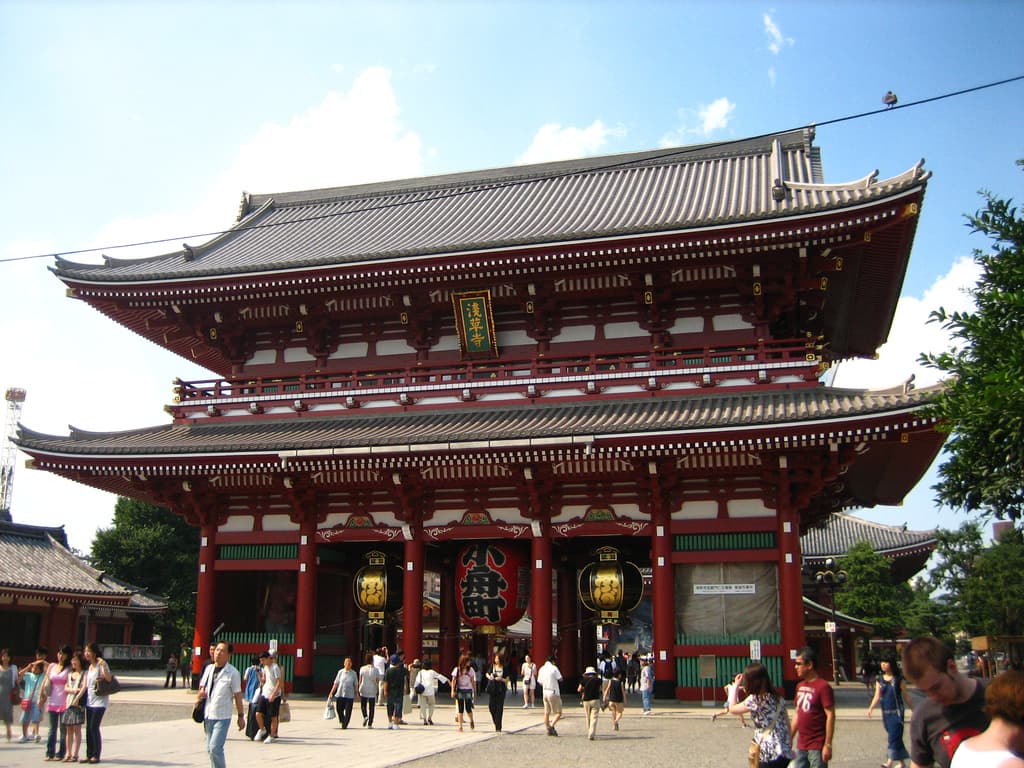
After the familiar lantern at Kaminarimon comes Nakamise; Hozomon stands before the main hall. These are two different gates, not opposite photographs of one building. Naming the correct gate makes your own travel record clearer.
The hall is the temple’s central space dedicated to Kannon; the present building was reconstructed in 1958. Distinguish the history of the religious site from the construction date of what stands before you. Looking at the role of the hall and surrounding spaces adds substance beyond browsing the shops.
| Order | Look for |
|---|---|
| Kaminarimon | Orient and agree where to meet |
| Nakamise | Browse without blocking the route |
| Hozomon → main hall | Distinguish gate and worship space |
| Food or riverside | Choose by time and energy |
Separate hall, shop and telephone hours
The main hall lists 06:00–17:00, with opening at 06:30 from October through March. Use that window when visiting inside and check notices for ceremonies or exceptions. Other temple buildings need not share the same schedule.
Shop hours and telephone enquiry hours cannot be substituted for hall access. An early precinct visit and a shopping visit serve different aims. An evening exterior walk does not imply that the main hall or every shop remains open.
Participation is optional; consideration is not
Sensoji is an active Buddhist temple. You can observe quietly without participating in religious practices, but do not obstruct worship queues or push a camera close to someone praying. Follow local instructions rather than automatically applying shrine customs to a temple.
Incense, souvenirs and fortunes need not become a compulsory checklist. Step aside for photographs and obey restrictions. In a crowd, looking at the building from an open position can be more rewarding than waiting a long time for one front-facing image.
Add one riverside or experience choice
After the hall, choose food or a walk toward the Sumida River. A kimono, rickshaw or guided booking should determine the meeting point, activity window and return deadline; reduce the walk around it. Adding every activity means the original half-day allocation no longer applies.
Separate return transport, meals, optional paid experiences and purchases in the budget. A guide’s price should not be read as the temple’s own admission charge. Check your return station and next connection; omit the riverside if tired. Understanding the two gates and hall and returning comfortably makes a complete visit.
Sources & verification
Prepared by Gollaba using the sources below. Planning suggestions are editorial judgments, not claims of a personal visit.
- Sensoji — Precinct guide ↗Source checked:
- Sensoji — Official visitor information ↗Source checked:
- Sensoji — Main hall ↗Source checked:
- GO TOKYO — Asakusa ↗Source checked:
- Sensoji — Visiting and worship ↗Source checked: